Friday, 27 June 2014

Relationship Between Audience and Films

Relationship Between Audience and Films


In this movie the Director is trying to get across the message of the irony of the many films it is portraying, it takes the same style of many stereotypical horror films, and adapts it into something else. As the stereotype of the movie is very well known and common, the audience can understand it, and realize the meaning that the Director is trying to get at and communicate to the audience.

This film is a horror, this means it can be seen as a pleasure as well, as the people are watching something that they themselves do not have to experience, making it more enjoyable, as it is someone else's hardship.

In the movie we create a large empathy for the lead character and her companions, as it is these characters that have an emotional background, and throughout the story change and we as the audience respond to that change. Developing with the character, so almost relate to them, this makes a film more pleasurable if we can relate to them.

The complexity of the story, as it evolves from one stage, to a second, and them moves into something even bigger, this drags the audience in, making them feel like they are involved in this in some way. The movie has almost three levels in some way, and because we as the audience are seeing the two sides to a situation, we are interested to learn more as well, which involves watching more and being dragged more into the situation.

The film uses Frameworks if Interpretation to communicate the cultural reference of the stereotypical characters in it, and how they are used as the framework for allot of films of the same genre. The characters all use the same features of their stereotypes and have the same characteristics which considering the film and the narrative is very ironic.

The audience after seeing the film understand the media literacy communicated by the poster, and realize what the message means. The image of the Cabin on the poster communicates how the poster describes the complexity and the levels to the narrative.

This film uses intertexuality to refer to other films, when the monsters are revealed and released from there cages, we see hundreds of these different monsters, and these monsters are all monsters that we would normally recognize from stereotypical horrors, so we make the connection between them and the other horror films that these characters have been in. For example, the giant spiders may make the connection to the spiders from traditional  horror films such as: Arachnophobia, or eight legged freaks. Another example would be the Hell lord and the connection between that monster and the monster from Stephen Kings, Hellraiser.


The meaning of the film is communicated to the audience as, turning the situation of the gruesome horror into something mundane, a small office where the characters watch and criticize the horror tropes, which is ironic as they take place on themselves as well. The meaning of the film is simply set out to suggest the predictability of the horror genre, and how it can always be for seen before it even happens. But this movie plays with these rules to define this statement.

The film uses very current new and experienced effects, the monsters are all very detailed and have very well crafted costume designs and props that make the characters both frightening and recognizable as monsters. The CG I, explosions and other effects also are to a high standard, therefore the audience enjoy it more, and are more compelled to go see it. The film apply's the effects to the genre as the horror genre will often use high tech effect to help represent monsters or create the effect of gore and etc.

This film approaches a large audience as in the trailer credits include the name of a famous Director/Producer Joss Whedon, and as this will be the next film he will be part of the production on, it attracts the Joss Whedon fans, they will next want to be going to see that movie.

The audience can after the movie create a Fandom around the concept of it, as these is the key feature and what is the most compelling to the audience, so people could be buying the posters as the poster describes the narrative in a single image. The monsters involved have also been used around the fandom of it, for example in the movie it makes us think of a Unicorn in an entirely different manner, something very dark, evil, which is why people have gone into buying t-shirts of an evil unicorn, as it has a very dark sense of humour which a lot of people like.

 
People have also applied the monsters and idea of cabin in the woods to the use of events and websites, for example people discuss about their favourite monsters on fan made websites, people also use the monsters to base their costumes on at Comic-Con.

The film however does not use any interactivity in anyway, as the audience do not get involved in way.

The fact Joss Whedon is used also adds to the Pre-Post Viewing Experience, making more people want to go see it, other people such as the actors Chris Hemsworth and Fran Kranz, both actors who have appeared in other shows that make them well known, recognizable, so more people get more excited for the movie.

However this film has its own conditions of reception, in that people who have not seen many horrors, and dont understand the idea of a stereotypical horror, will not understand the concept of which this film is trying to get at and explain. This is why some people may view the film differently as they see it differently.

By Stuart Fuller

Thursday, 5 June 2014

The Lego Movie-Targeting the Audience

The Lego Movie-Targeting the Audience
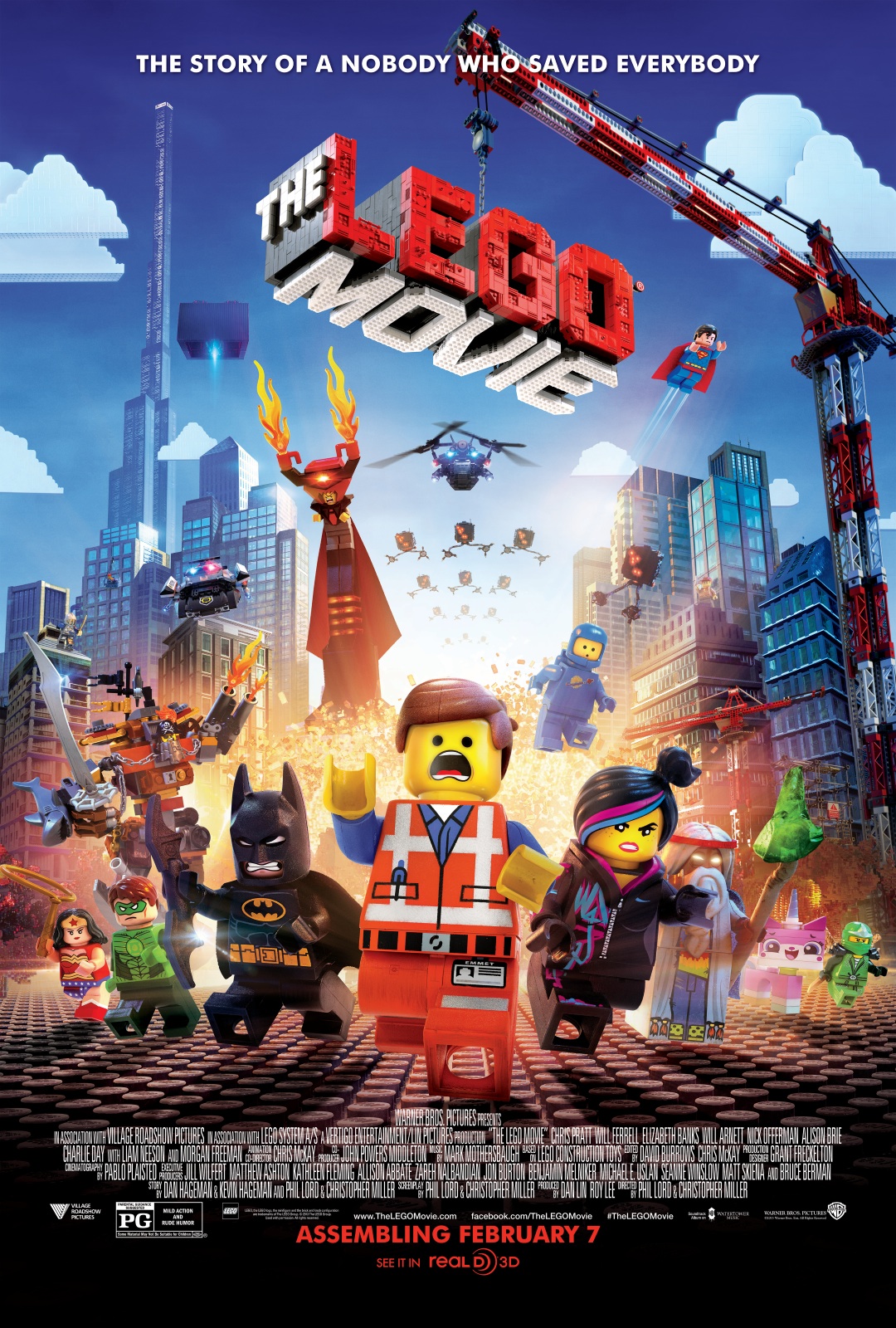
The Lego movie is a popular family, adventure, comedy, animation. Based on the story of an ordinary Lego construction worker, this character develops and is intrusted with a qeust to stop an evil tyrant and save the world. The movie appeals to young children because of the toys, bright colour, humour and the adventure in the narrative of it. The movie did however appeal to parents as well, as these would be going to see it with them, so there were parts of the movie that the adult could enjoy, but the children wouldn't understand.

The advert was targeted at all family members, but mostly children. The trailers were bright funny, and used music to target the audience. The posters were also made to be bright colourfull, and to appeal to the target market. The colour is all bright, happy and there is lots of it. The Logos and characters themselves are very colourfull themselves.

On the poster we see the adventure communicated by the explosions, running and various building structures around them, for example a western building, a city scape and even an ocean. The characters on the poster also feature lots of well known icons such as batman, superman, greenlantern and wonderwoman, these are reconisable to children but also people who are older and remember the older toy Lego sets, all of them originating from so many different Lego sets.
 

The lego movie also used a specailly made add brake in between the programs on ITV, and created the normal adverts from Lego. This was used as a publicity stunt. This related to the audience in that it was in between the programs they might enjoy, during family hours. The ads were also humorous, and creative. They grabbed peoples attention and was done at a prime time for family viewing, therefore the whole family viewed together, and advertised what the movie would be about.


The Production also released a new event at the Lego Land resort Windsor, this attracted lots of kids and attention, this event was fun and playful, especially for children. The event created more buzz/hype so more people wanted to go see it. The entire event was based around the story of the movie, so people had a glimpse into what the movie would be like to get them hyped for the movie.
 
 By Stuart Fuller

Wednesday, 4 June 2014

Production context's part 2

Production Context's
Independent, International co-production and Developing countries

Independent

An independent movie is one that has been produced outside of a major studio, very little influence from any major studio's at all. An Independent film can be distributed or produced by the subsidiary of a major film company.

For a film to actually be considered Independent, less than half of the money that goes into producing and funding its creation can be from a major studio. An independent film can be funded by any method, this includes through your own finances, or through other people.

An example of an independent film that was funded through an other source would include reservoir dogs. The movie started with a budget of just $30,000.00, this all came from Quentin Tarantino's own pocket. Quentin's producer asked him for time to look for more money to fund the project, the producer gave on the script for the project that was to be called Resovoir Dogs to more people, it was then passed around until it ended up in Harvey Kietel's hands. Harvey Kietel then became the character Mr. White, he then went on to become the movies Executive Producer as well, providing a budget of 1.2 million dollar's.


So that an independent film can advertise better, but also gain a larger audience, they often use at least one star in their movie, so that they can gain more audience through the actors fan base. Another way of advertising and funding an independent film is through film festivals, as these give them the chance and opportunity to show them off and earn funding.

The more an independent film wins at independent film festivals, the more likely it is that they will be approached by a distribution company, they will most commonly want the rights to all three.


This will all help with the distribution of the movie. The movie can be distributed in a variety of ways, by a variety of companies. The movie is distributed in three different ways: Theatrical, DVD and Broadcast. Sometimes different companies will control the different parts of the distribution. Other times the different parts of the distribution could all be controlled by the same company.

The different mini major studios will provide more chance of a bigger up front payment, as a distributor they will control the theatrical, DVD and Broadcast release of the product. However this will mean that whatever money a production receives for its distribution will be the only payment. By selling distribution rights separately it provides the opportunity to make additional sales through different distribution methods, making more money and profit.

International co-production

An International co-production is a film made by production companies from different countries. These are great opportunities to open into different markets around the world, increasing the audience size. This can also increase the quality of a production through the sharing of investment's and funds.

International co-productions are made possible through agreements between countries, normally the agreement is set out to achieve some kind of goal this could be economic, cultural or even diplomatic goals.


The key feature of an International co-production is the fact that the production can be considered a national production by each partnering nation, meaning benefits available to both the separate nations television and film industries are available to the production.

The benefits of an International co-production include the access to partner governments and their incentives and subsidies. This could include tax benefits, to encourage film production, helping to produce films that are international, as they share the benefits.

By access to other partner nations markets, we have access to a larger audience, meaning a larger market to appeal to. The access to partner nations could include Locations, cultural benefits and more available technology. But the co-production allows for a better opportunity to use the film as a learning curb.

The problems included with an international co-production include an increased amount in coordination of the production and shooting costs. There is also a cost involved for dealing with government and the laws.

In an international co-production it can also have a difficulty with overall control of the project, they begin to lose specificity and creativeness.

Developing countries

Developing country are often referred to within cinema as the third cinema. Third cinema films mostly involve Africa, Asia and Latin america. Third cinema films tend to involve politics, and government, as these are big issues in these developing countries.

Third cinema was started in 1959 during the Cuban revolution, Che Geuvera supported this revolution. But its profile was raised in the 1960's by low budget, experimental movies, created by groups of Latin American filmmakers.

A very important third world film, La Hora de los Hornos (The Hour of Furnaces), was considered the most important third world documentary. This movie became inspirational, describing the famous Argentinian "dirty war".

African third world cinema will normally concentrate more on the issues of independence and cultural identity. This began with looking at the life of African tribes, but this has developed a lot since then, moving on to show the contemporary life of upper class citizens in the cinema of Nigeria, this is also known as Nollywood.

The Nigerian film industry has developed so much, growing into the role as second largest film industry. This has all risen with the increase of affordable filming equipment, editing technologies. The films are often produced for less then $15,000 and these are often produced in less than a fortnight.

The Nollywood system has only one distribution method, and that is via video CD's, no involvement of cinema. These are cheaper and more widely available, even in the more rural areas of Africa. Not many of these movies are released abroad or in the UK.

Developing countries do however still use the same methods to sell the production, this includes using famous people, famous songs, and any form of iconography.

Wednesday, 14 May 2014

In Fear-British

In Fear


The genre is horror, this is communicated very quickly by the title sequence, but also by the location it immediately starts in, an eerie, dark woods. Mystery is also introduced by the characters phone message, but also by the mystery of the scene where she is on the toilet and the writing around the cubicle is scratched into the wall, and as she looks one way we see an eye through a peeping whole, we know she is being watched.

The production context is British, we know this because the entire story is set and filmed in England. The character's are also all from England, and the dialogue they use is mostly in a british context, with the traditional slang and bad language that we use.

The stars involved are Iain De Caestecker who plays Tom, he also appears in many other british titles such as Corronation Street and Filth. The Character Lucy, played by Alice Englert, is also an actor who appeared in the British Movie Ginger & Rosa. As they are English characters, the english audience can understand them more, which is where the target audience lies.

The narrative relates to the production context in that the characters are on holiday in the woods, this is very common in many british films, using the landscapes we have.

The technology used is mainly the effects and props used to make the blood, injury's and broken down car's, because a British context has less money involved to create the technology or props and less technology, because the context is less advanced than hollywood.


Rise of the Zombie-Bollywood

Rise of the Zombie


The genre for this movie is communicated through the music, colour and the story. We are first presented with a clear genre as the movie begins in a dark woodland area, where horror’s typically take place. The colour is mostly dark black with a bright glow from behind the trees, suggesting mystery to both the story, character and the location he his in. The title sequence also portrays the genre through the text font, colour and the design. The design of the title is a blood red with a black background.

The stars included Luke Kenny, a famous actor and director in Bollywood, he has also worked on: Rock On!! and Bombay Boys. He was used in this movie because it is a Bollywood orientated film, more people from his country and company context will recognise him, so the movie will have a larger gathering, because of his own followers.


The production context relates directly to Bollywood because of how it is financed, the amount of money that has gone in to it as a poduction. The project was run on a budget of $500,000, which is a smaller budget than most Bollywood films, but this movie did only require two very minor locations, and very little actors or SFX.

The only effect's involved were the ones that were used to create the gore, so his scabby arm, and the brutally mutilated bodies.

The technology used also relates to Bollywood in how its country is less advanced then Hollywood movies, this is why we don't see any CGI. As this is much more technically advanced.

The stars included Luke Kenny, a famous actor and director in Bollywood, he has also worked on: Rock On!! and Bombay Boys. He was used in this movie because it is a Bollywood orientated film, more people from his country and company context will recognise him, so the movie will have a larger gathering, because of his own followers.

Thursday, 1 May 2014

World War Z-Hollywood

World War Z

The genre is communicated very quickly right from the start, we see the title sequence, the font for which is large and pans slowly towards the camera. The colour is blood red with a completely black background. Once introduced to the story, jump scares also begin with the action scenes, for example as the police man talks to Brad Pritt through the window of the car, we are surprised by the police mans death when a truck suddenly rolls by, crushing him. The music through out the title scene is also very tense, and this builds up through out, with great suspense.

The production for this movie is Hollywood. This is because of the stars involved, for example Brad Pitt, the amount of money involved, to pay for the technology, amount of actors, and sets, the technology used also relates to the context Hollywood, because the more developed the country, the better its CGI, and other computer technology would be. The fact that this movie begins in America, is also part of the context: Hollywood.

Brad Pitt stars as the main character, as he is a very popular actor from Hollywood, more people who like his acting skill will want to go see the movie. He has a large audience of followers, so more people will want to watch the movie. More people can also recognize themselves with a more familiar actor. Because of his great acting skill he also plays the part perfectly.

This movie uses CGI to create the zombies in the movie, the quality i to a very high standard, because of the production value, and the context of the production. When compared to other movie's for example a British context movie, the quality of the technology is not as great because there is less money involved.  For example this scene from Severance, a British context film, uses a CGI moment, but it looks less real than the zombies in World War Z.

The Mis en scene for World War Z, uses connotation to create the effect that Brad Pitt is acting as savior to the world, and will deliver it from evil. They compare him to Jesus through imagery such as the scene in which he say's: "were going to Jerusalem", and as he says this he steps into the light, and a halo forms around him and his Jesus like attire. 

Saturday, 29 March 2014

Silence of the lambs-Horror

Silence of the lambs
In the film Silence of the lambs, the director: Jonathan Demme, used different techniques and styles to capture the audience. By using different connotations and symbols, he created images that were used to understand the story and suggest other matters within the story.

When we first meet the main character, Clarice, we straight away associate the genre of this movie through what we see. All the camera angles, music and colour straight away suggest what genre this movie is. For example the music is tense, and with a slight build as she runs through the forest. The camera angle also follows her, like that of a killer chasing its victim. But this is ironic in that she is the one later doing the chasing after the killer. The location is a woods which is also a dead give away as it is one of the most iconic location settings for a horror. The atmosphere in the woods is also chilly with a small layer of fog just off the ground, creating the very misty atmosphere.

As she runs through the woods she passes a few different signs, nailed to some trees. These are used as connotation in the movie. The signs each read: "Hate-Pain-Agony-Love it", ironic in the fact it is a horror.

As she runs she is then stopped by someone she works with, we then identify who she works for as the character turns around and his hat comes into focus, the hat reads "FBI" this then signify's who she works for.

We then see how she is seen by everyone else she works with, most of which are men. The imagery uses connotation to suggest that the men see her as less then them. For example she steps into an elevator, filled entirely with men, all of which are taller and look down on her in the centre. When some of the other male characters talk about her they talk to her like she is simply a bit of arm candy.

Later when she first goes to visit Hannibal, she descends to his cell, through many staircases, elevators and cell doors. As she gets closer the colour around her on the doors, walls and lights appears more red, this is suggesting that she is descending to hell, where Hannibal lives.

The lighting is also used often as a reveal to the mood of the situation, for example when hannibal is not giving any information away he hides in the dark of the cage, not revealing himself. The mystery of his escape also ends with a shot a prison guard hanging from the cage, creating the image of an angel of death, like the death head moth, but the light shines through it and hits a layer of myst on the floor.

The death head moth is frequently used in the story. It is a commonly known symbol of death because   of the small pattern on its back that looks like a skull. However in this story the skull on its back looks more like it is created by a mass of body's like the collection of bodies made by Hannibal and Buffalo Bill. The Moth is first found in the body of some of the victims in the story. When the moth is found, it is still in its cocoon. This could be Buffalo Bills way of saying he wants to be reborn.

Buffalo Bill in the story is seen as a Drag Queen, because of the clothes he wears and the way he is constantly trying to act more like a women. But obviously Buffalo Bill takes it a whole new level by skinning fat women to use their skin as a body suit. The movie describes that he is not a criminal because of who he is, but because of years of systematic abuse. The clothes he wears, the music he listens to and his dog are all stereotypical of a queer man.

This movie is an amazing display of cinematography, and uses a vast range of techniques, but my favourite scene from the move, is actually when Hannibal takes the homemade skin mask from his face to reveal himself. I like this scene because of the way it builds up to it, and the fact it is complete shock when it happens.

By Stuart Fuller

Tuesday, 25 March 2014

Mean Girls-Queer theory

Mean girls-queer theory


In the 1970's because of the increasing attention to feminist theories and the representation of women, racial and ethical minorities. The study of Gay and Lesbian cinema became a growing concern. They concentrated on relationships and issues within homosexuality and used realistic storytelling conventions to explore coming out, romance and aids.

In mean girls there are two characters that both act in a stereotypical way, one portraying a butch lesbian, the other portraying a camp guy.


Damien is the camp guy, he uses feminine hand gestures when talking, this can be seen as a queen. We are also suggested this by what he wears, for example the pink clothes that belong to him, this is used in a humorous moment when we expect the girl to have the pink clothes when it is in fact the other way around. He acts as q queen in the way that he is very flamboyant, for example the way he runs when he sees a girl and calls her Danny Devito. He is an effeminate gay man who can be considered a drama queen at times.


Janis is the supposed 'butch lesbian', acts as the dike female, speaks in an angry deep voice. She also gets rough when talking to other people and also wears clothes that cover her head to toe, this tends to be a more male trait. She acts very tom boy like, and portrays all the normal characteristics, but we find out at the end that she is not in fact a lesbian, and that this was simply a rumour started by her enemies. This movie is good in that it states that not all people should be judged for their sexuality based on their behavior, what they look like and what they wear.

By Stuart Fuller

Wednesday, 19 March 2014

Laura Mulvey-Feminism Theory

Feminism


Feminism theorists

Laura Mulvey created the term ‘Male Gaze’, in 1975; which means that a film audience are to ‘view’ characters, from the perspective of a heterosexual male. The camera lingers on the curves of the female body, and the events that happen to the female character are represented from a males view to these events. The female characters are portrayed as objects, this is obviously very voyeuristic.

Mulvey theorised that the original Hollywood movies were created solely to provide men with visual pleasure and erotic impact. The typical male audience are normally aligned with the films protagonist/hero. The audience gains pleasure from identifying themselves with the films protagonist/hero. If the female character is not seen in a lower position of power or authority, a male would not feel as powerful; he may even think this unconsciously. The Unconscious idea is that a man’s power and dominance over a character is his penis. And dominance is threatened if not aroused.

Movie clip-analysis

In the movie Cabin in the Woods, the five characters, the Sportsmen, the Scholar, the idiot, the bimbo and the virgin all take part in a game of dare, the female bimbo character is dared to kiss the wolf. As she approaches it we see the camera slowly pan up her body, the camera slowly lingers over the curves of her body. We also see she is wearing tighter clothes, small hot pants.

Next we are looking at her, through the wolves’ point of view; this identifies us as a male audience. We also see her hair colour is blonde, and in many stereotypical horrors, there is always a dumb blonde. As the female character begins to kiss the wolf, she slows down and we linger on this scene. We then see some of the male characters watching her; this again identifies the audience as the male point of view.

In the story line for this movie, this character is portrayed as the stereotypical dumb blonde. And using characterization, she comes across as also quite a slut.

By Stuart Fuller

Saturday, 1 March 2014

Scream-Opening Sequence

Scream Opening Sequence


During the first five minutes of the opening scene to the horror movie scream, we are set the scene for the rest of the movie.

The movie first starts with a title screen, from this we are given the immediate impression. The title is ghostly white with a blur of red for blood. The blurred red colour pulses with the tense sound in the background, giving the impression of a heart, until it comes to a dramatic close in which it ends with a 'Scream'- intended to be like the title of the movie, and a sudden bang, and swishing noise like a knife being hurled around. We then know her life comes to an end when the heart sounds stop and her scream is drowned out by the ringing of the telephone. This title uses mis en scene in that as the screaming in the title fades out it is also drowned out by the noise of the telephone ringing, giving the impression that no one will be able to hear you scream. The white colour of the title is used to represent the pale scared white face of a character,  and also the mask of the killers is also white, with a spooky expression.

As the beginning scene actually starts after the title, we are given a connotation of the fact that she is a blonde and is representing the other horror movies we have seen in which the blonde character is in trouble and does the things we would normally expect her to do, like search round her house for the 'killer'.
We are then listening to the conversation between her and the character on the phone, we cannot find anything in his voice that is recognizable, it comes off cold like that of robot, almost indexical in that we find no emotion in the character voice, like that of a robot.

As the camera then moves into the garden we are confronted by a luminous tree, it branches dark and web upwards into the night sky with small skinny branches at the end that hang over. This is also connotation in that they hangover like giant puppeteer arms controlling the swing, like the bloke is actually controlling the women inside, by the fact that the swing is moving also suggests that there has also been someone there.

Next as she picks up the phone to talk again, she is putting the popcorn on the oven, this popcorn, builds tension through this entire scene as it creates a large tense background noise, this builds and builds, until the character enters the house. While also talking to the character, she picks up one of the knives from the counter, and we see the weapon that is actually used to murder her later, but as she picks it up it creates a sound effect that resembles that of a stabbing noise, we hear a whoosh and a clunk as she places it back in the holder. This is used as foreshadowing for what is later to happen when he stabs her.

The two characters then start a conversation about horror films and this sets a very eery atmosphere, as we begin to recognize similarities between those movies and this one. For example the character on the phone even later calls her "blondie", like the blonde female character in many other horror movies.

The tense background music then starts when the character lets slip "Cause I wanna know who I am looking at", this builds with the scene as she becomes more frightened and the character on the phone becomes very angry.

After being frightened she makes a move to the doors of the house, ensuring they are locked and as she looks through the windows, we are given the suggestion that she is trapped inside the house, this created by the connotation shot of her looking through the frames of the window, this almost looks like that of prison bars.

When the door bell rings, she next asks: "Who's there, ... who's there!" and the character on the phone, again relates the similarity of her saying that, to that of other horror movies, and we relate the two to understand what is going on, and this creates fear in the viewer.

The camera angles are also used for effect in this video, in that the camera follows her almost like she is being followed by the killer. The camera also pans in for close ups when she is frightened so we see the terror in her face. But it first starts when the killer lets slip that he is watching her, the camera pans in for the close up, but the next time it happens when he releases his anger and his tone of voice completely changes, the camera then moves for even more of a close up.

The lighting in the first scene also changes with the situation, as she become for frightened, she moves through the house, and into the corridor where there is less light and there is only very dim light, from the back door, and from the small lamp  next to her. The whole situation takes place at night, this lighting all perfectly represents the darkness of the situation she is in.

By Stuart Fuller